My Semiprecioussssss - Now With Links!
Oct. 30th, 2017 03:41 pm![[personal profile]](https://www.dreamwidth.org/img/silk/identity/user.png) kerravonsen
kerravonsenI have been stocktaking my beads (among other things). This has meant counting them, photographing them, and finding replacement sources/costs for them, since most of them were bought years ago and I made no note of that information at the time, not to mention that a huge number of them were bought from retailers that no longer exist. The most interesting beads are the semiprecious ones. So I'm going to give you some random but interesting facts about semiprecious stones/beads that I've been noticing.
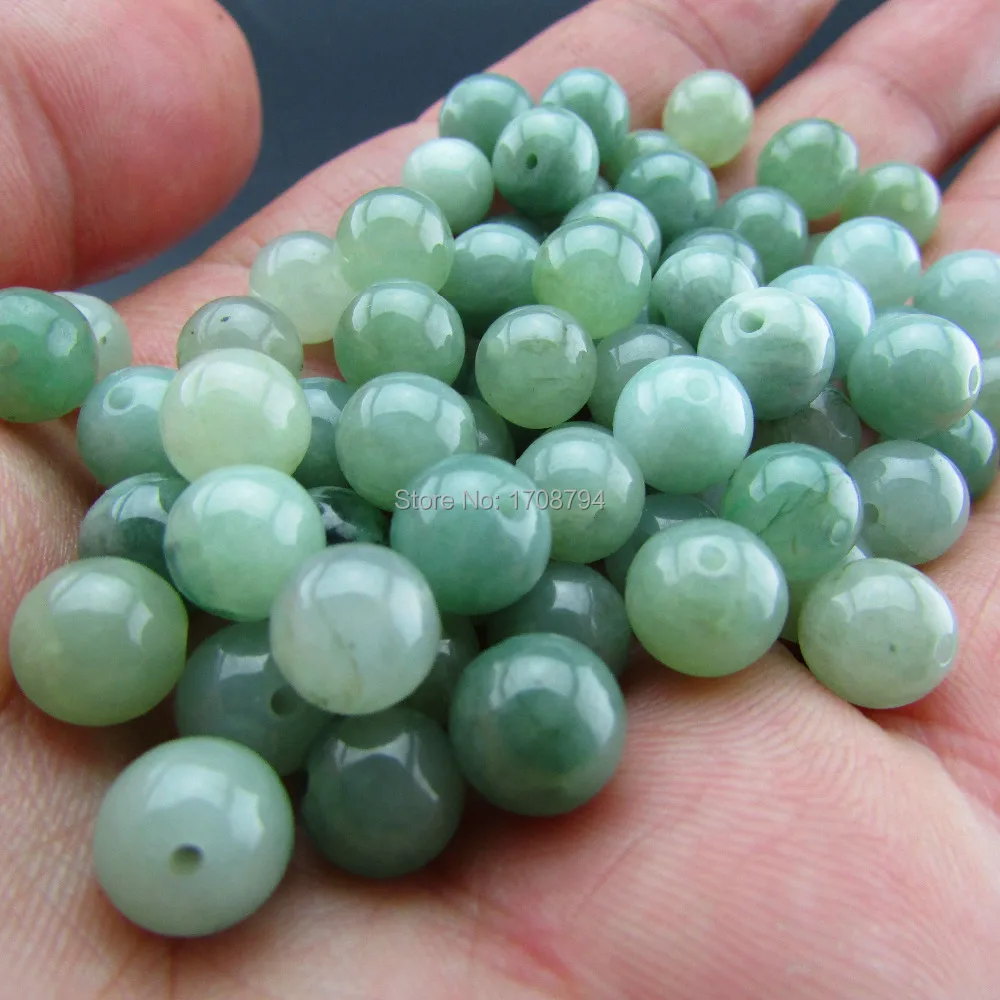
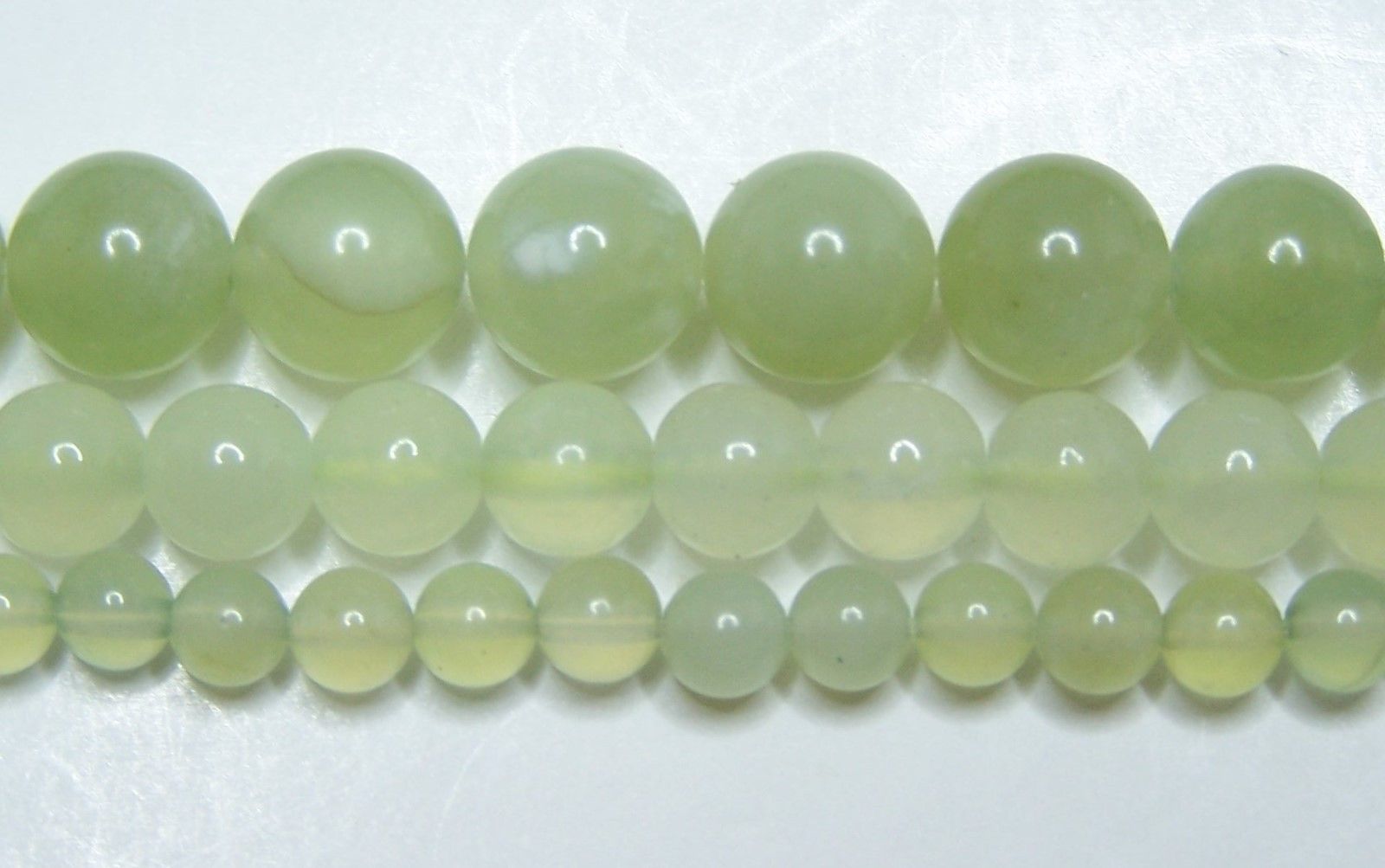
The most-imitated semiprecious stones are Turquoise and Jade, possibly because they were popular in the ancient world (as was Lapis-Lazuli). There are soooo many stones on the market that are sold as "such-and-such" Jade and "so-and-so" Turquoise that aren't really Jade or Turquoise at all. There are two kinds of "true" Jade: Jadeite and Nephrite. Both these jades come in shades of white, green, and less common other colours, though I get the impression that Jadeite is best known for a "jade green" colour, and Nephrite for a deep green colour. New Zealand "Greenstone" is actually Nephrite. The least-deceptive faux jade is the so-called "New Jade", which is actually Serpentine. I consider it to be the least deceptive because (a) it can very easily be mistaken for Jadeite because it has a similar colour and is often formed in association with Jadeite, (b) it is a nice stone in itself, not as hard as Jadeite, but still a natural green colour; it doesn't need to be dyed in order to resemble Jade. Another one that I like is "Peace Jade", which is a mix of quartz and serpentine, and thus is white and green. The most deceptive imitation Jades are the ones which are dyed, such as "Mountain Jade" (dyed Marble) or "Malaysian Jade" (dyed Chalcedony) and others that don't even have specific names. I don't like dyed stones, generally, unless I don't know that it's dyed, because really what I object to with dyed stones is that they look fake and unnatural.
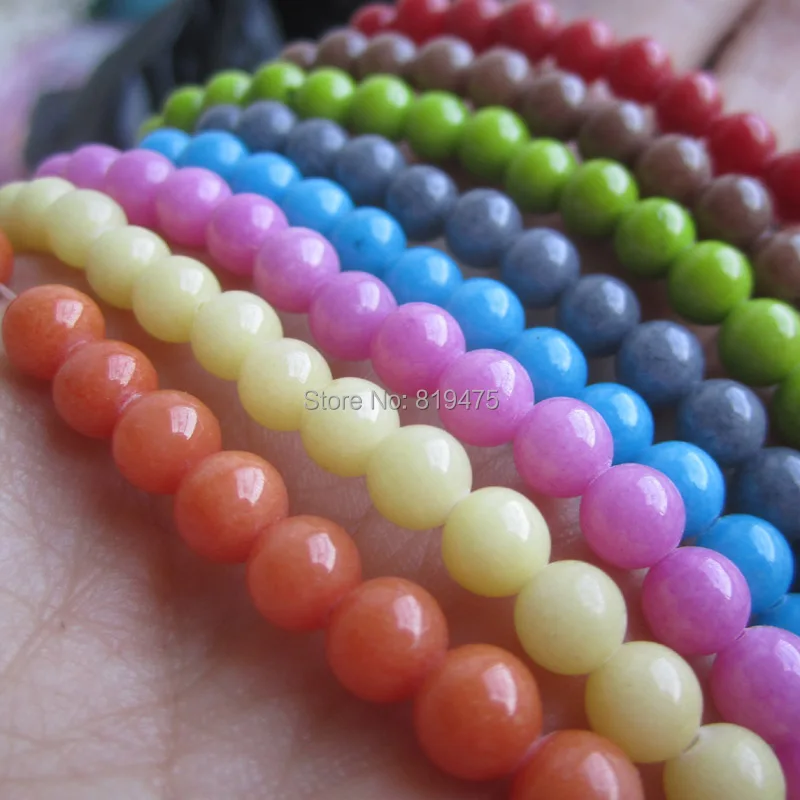
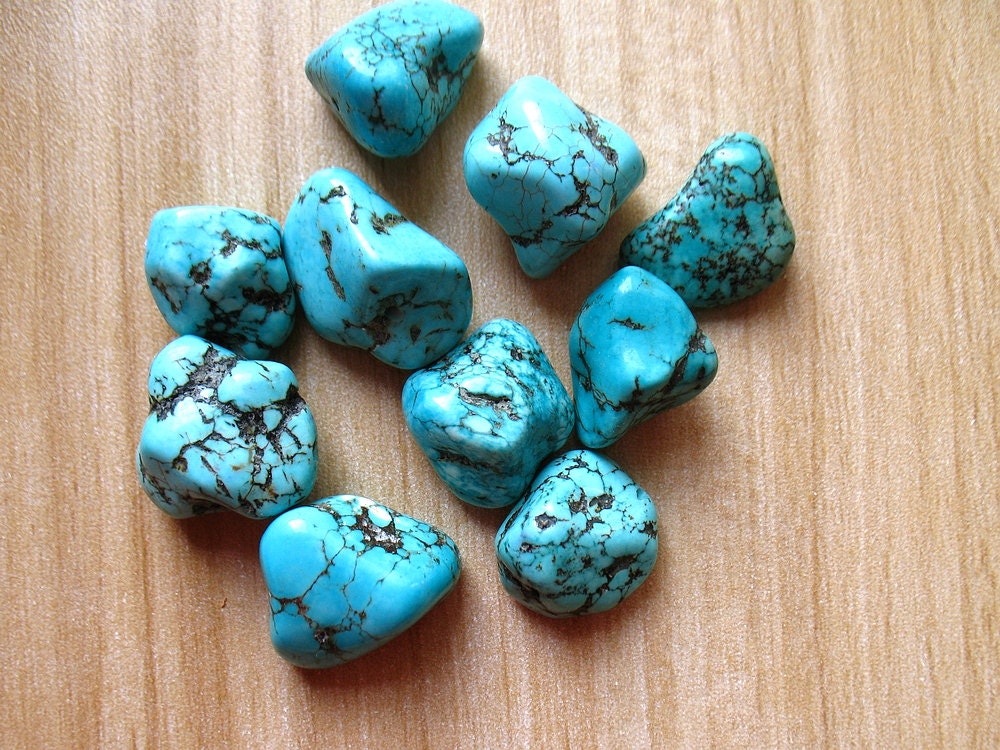
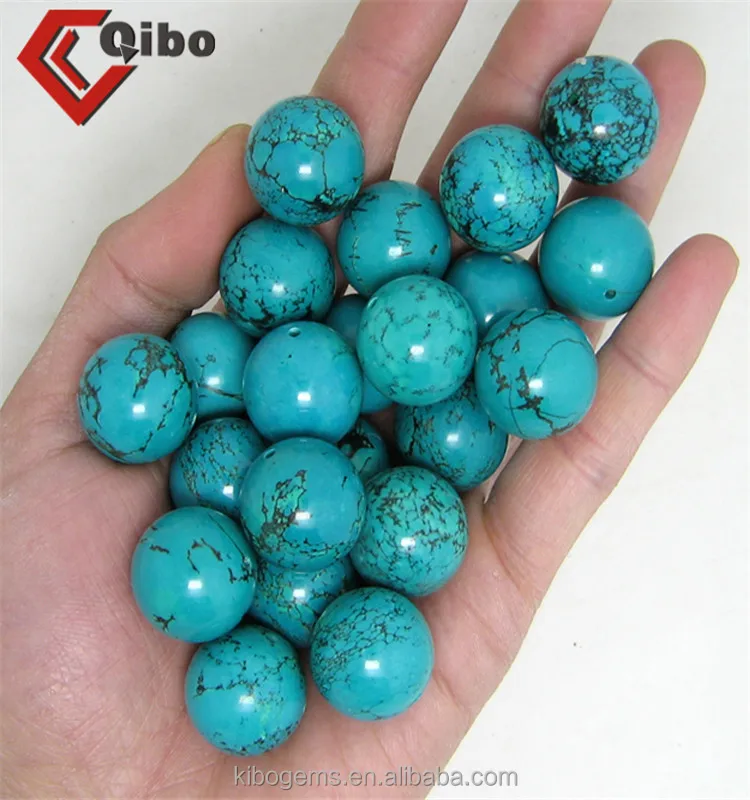
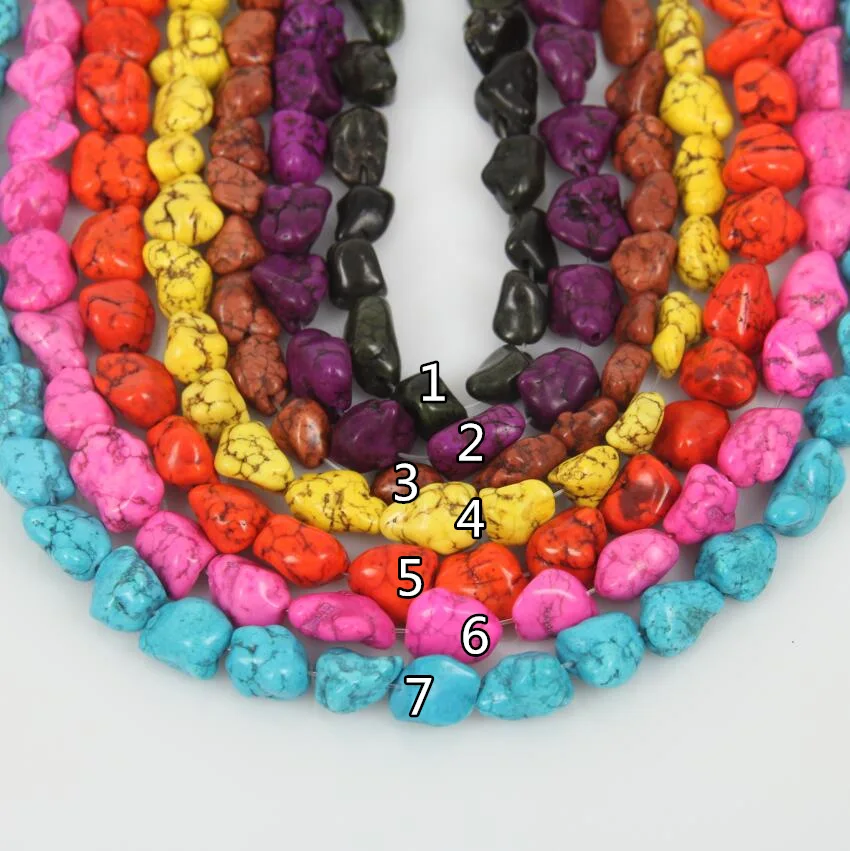
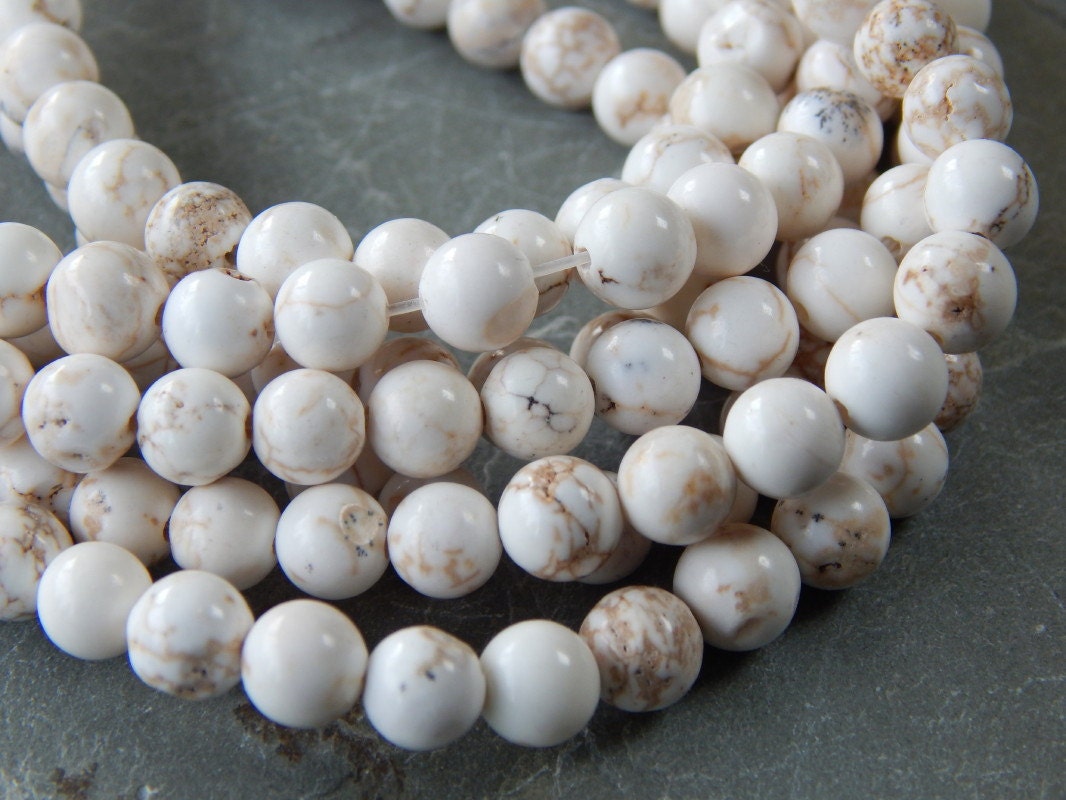
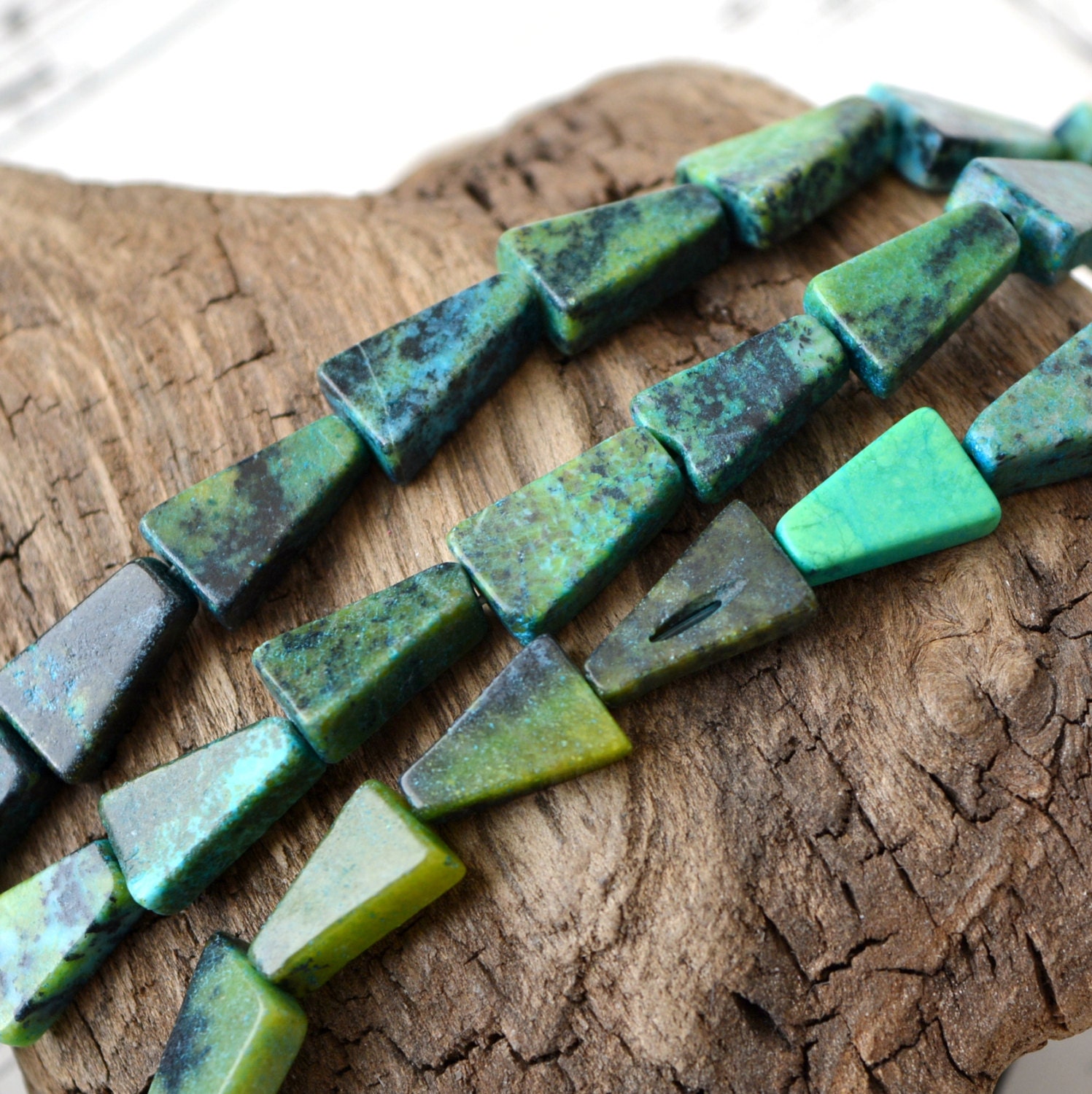
Then we have Turquoise, which again has two groups of imitations: the natural stones that have a vaguely turquoise colour, such as "African Turquoise", which is actually Jasper, and white stones which are dyed a turquoise colour. Oh, I suppose there's a third group, "synthetic" turquoise, which, if I recall correctly, is made of real turquoise which is ground into powder and then glued back together with resin. But I may not recall correctly. The two most popular stones for making dyed turquoise are Howlite and Magnesite; both of them are white stones which take up dye pretty well, and often have veining in them too, which makes them look like turquoise even more. (e.g dyed Howlite + dyed Magnesite. Also see video: How to tell the difference between Turquoise and Dyed Howlite) Howlite has grey veining, and Magnesite has veining in shades of brown. The frustrating thing is, I really like Howlite in its pristine, un-dyed state: it is a beautiful clean white colour, and the grey veins make it interesting. But half the time when I'm looking for Howlite, it's all dyed. frowns Oh, and another stone that tends to get sold as "turquoise" (or "yellow turquoise") is the ever-ubiquitous Serpentine, usually dyed as well.
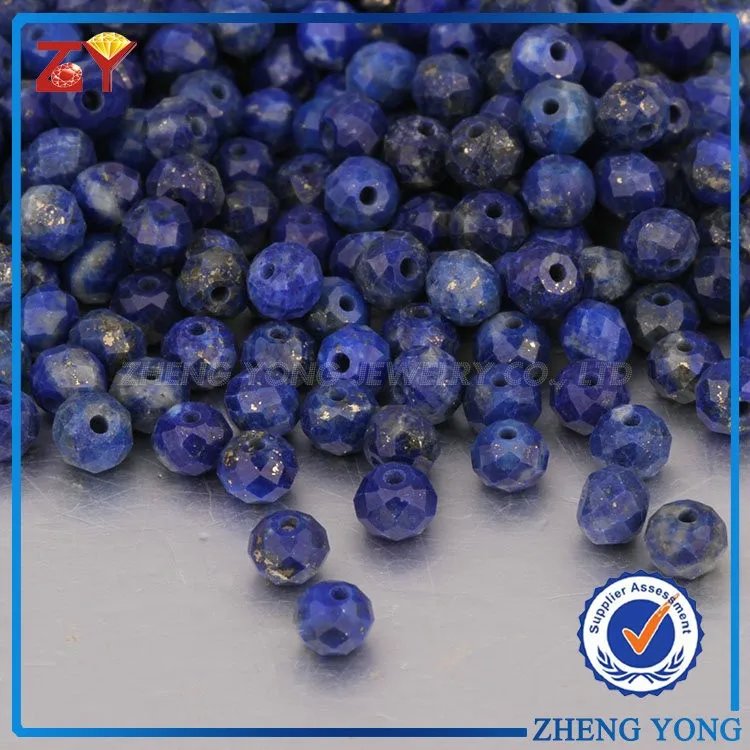
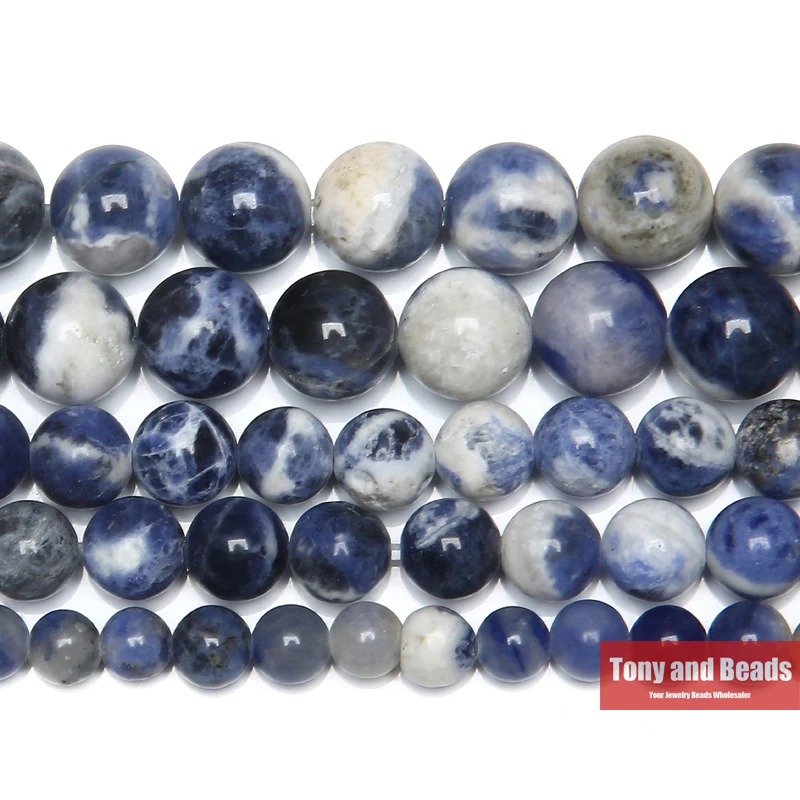
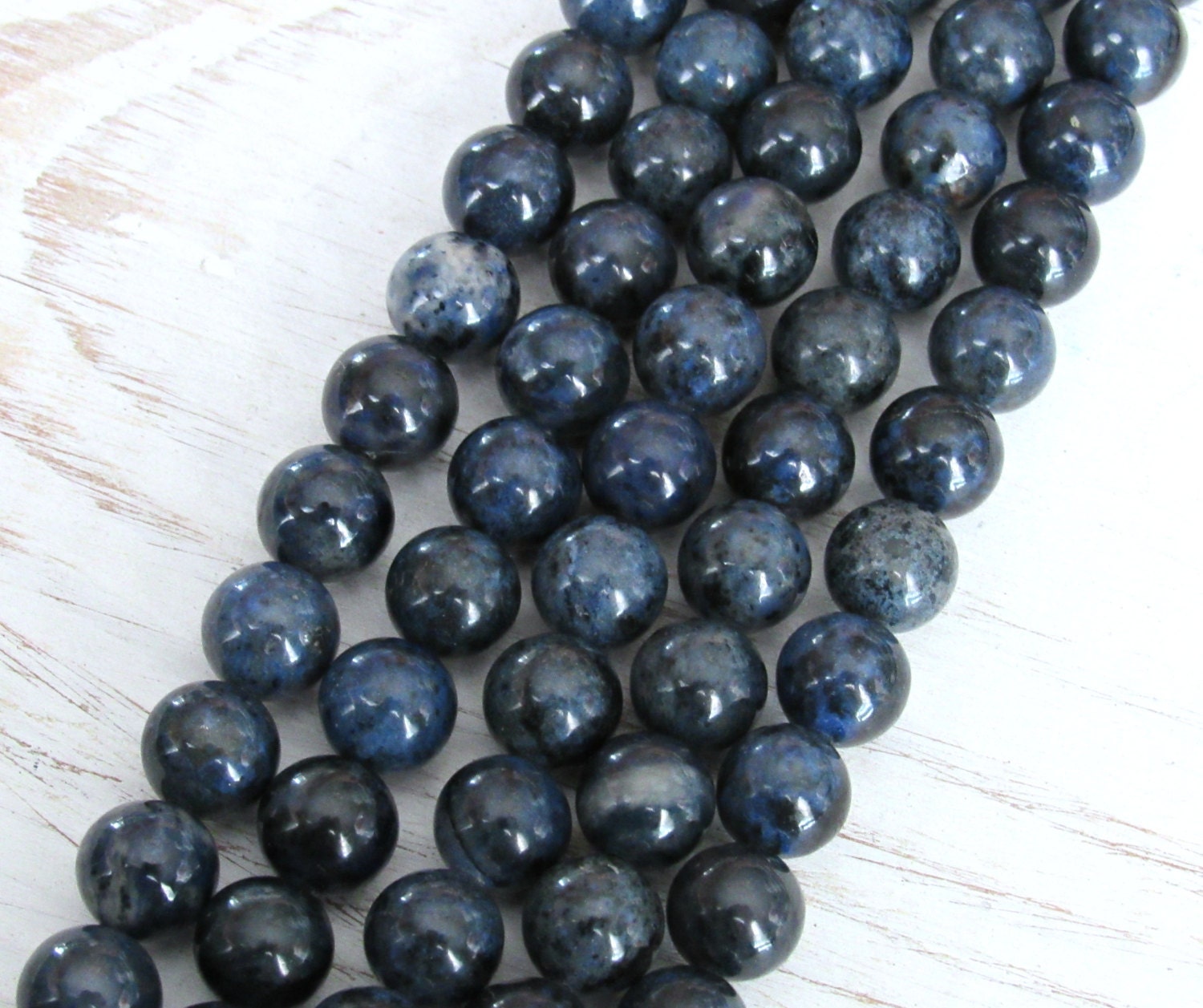
Then there's Lapis-Lazuli. It doesn't tend to have things called "thingumy" Lapis, but there are certain stones that are often used as substitutes; Sodalite and Dumortierite. They're pretty easy to distinguish from each other, though. Real Lapis-Lazuli is blue with flecks of brassy gold (Pyrite) and sometimes white. Sodalite is blue and white. Dumortierite (or, more likely, Dumortierite Quartz) is dark blue sometimes with darker blue-black veins. All pretty stones.
The most expensive beads I've catalogued so far (and there are still a bunch I haven't catalogued, including my Lapis-Lazuli) have been:
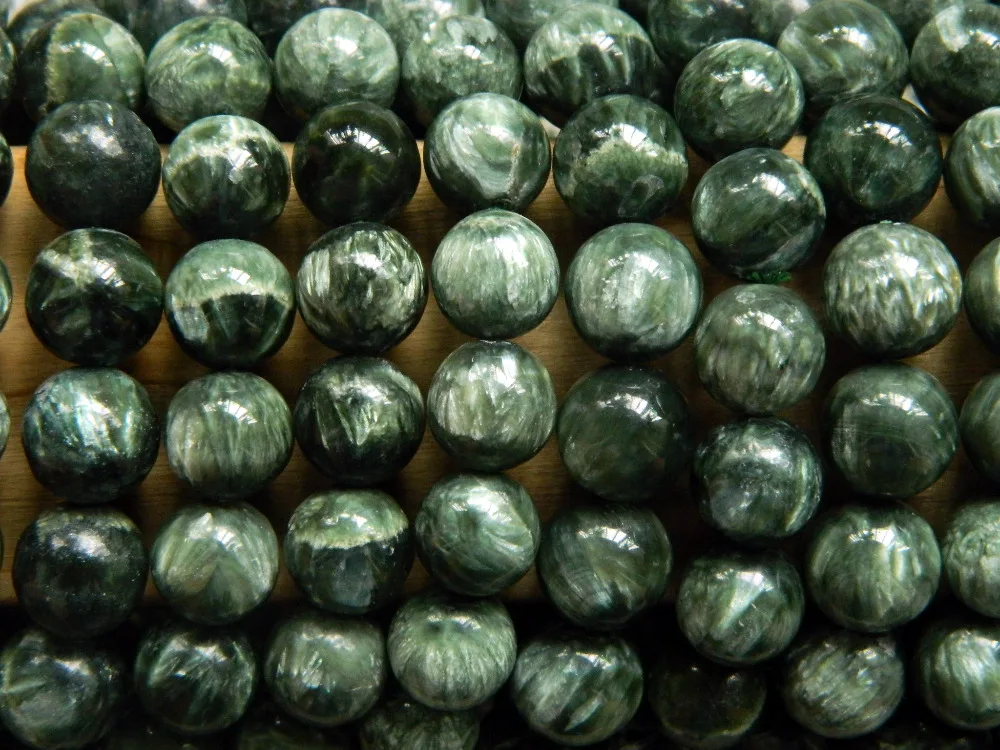
- Seraphinite. This is a semi-precious stone I hadn't heard of before I bought my beads of it. It is lovely, but very expensive; the replacement cost from the only place I could find any came to about $5 for a 12mm bead! The expense I'm sure is due to its rarity as well as its beauty, since it is only found in one place in the world: the Lake Baikal region of southern Siberia. The reason it is called "Seraphinite" is because it is named after angels' wings: the main colour is a dark green, but there are iridescent white feathery inclusions all through the stone.
- Green Opal. I hadn't heard of this one either, since the only opal I'm familiar with are the precious varieties which are mined here in Australia. (I have some boulder-opal pendants I bought a while back, which I will eventually turn into necklaces when I figure out a good enough design for them...) The Green Opal beads I have are green and brown; dark green in the midst of a surrounding stone in shades of brown. Really nice. Again, they are so nice and so expensive that I'm stumped as how best to create jewellery worthy of them. Ah well, I'll figure it out eventually.
- Nephrite Jade (see above!) The beads I have are a lovely dark green.
A general rule of thumb for bead prices is "the larger the bead, the more it costs per strand". This is fair enough; for semiprecious stones, bigger beads require larger sections of pristine stone to carve the beads out of. So it's probably no surprise that stone-chip beads are much less expensive than regular beads, even the tiny 4mm round beads. When one is buying beads per-strand, the standard length of a strand is 16 inches, no matter the size of the bead. For chip beads, the standard strand-length is 36 inches, so it's still a lower cost per-bead even if the price per-strand is similar, but the price per-strand is often lower as well. So if you see a lot of handmade jewellery with semiprecious chip beads, that's why: it's cheaper to make.
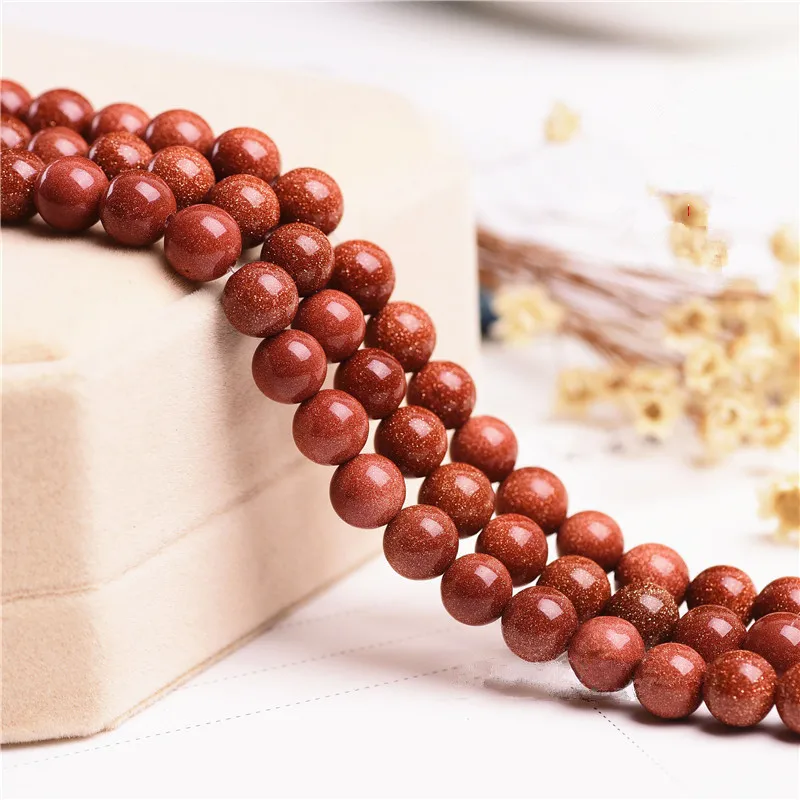
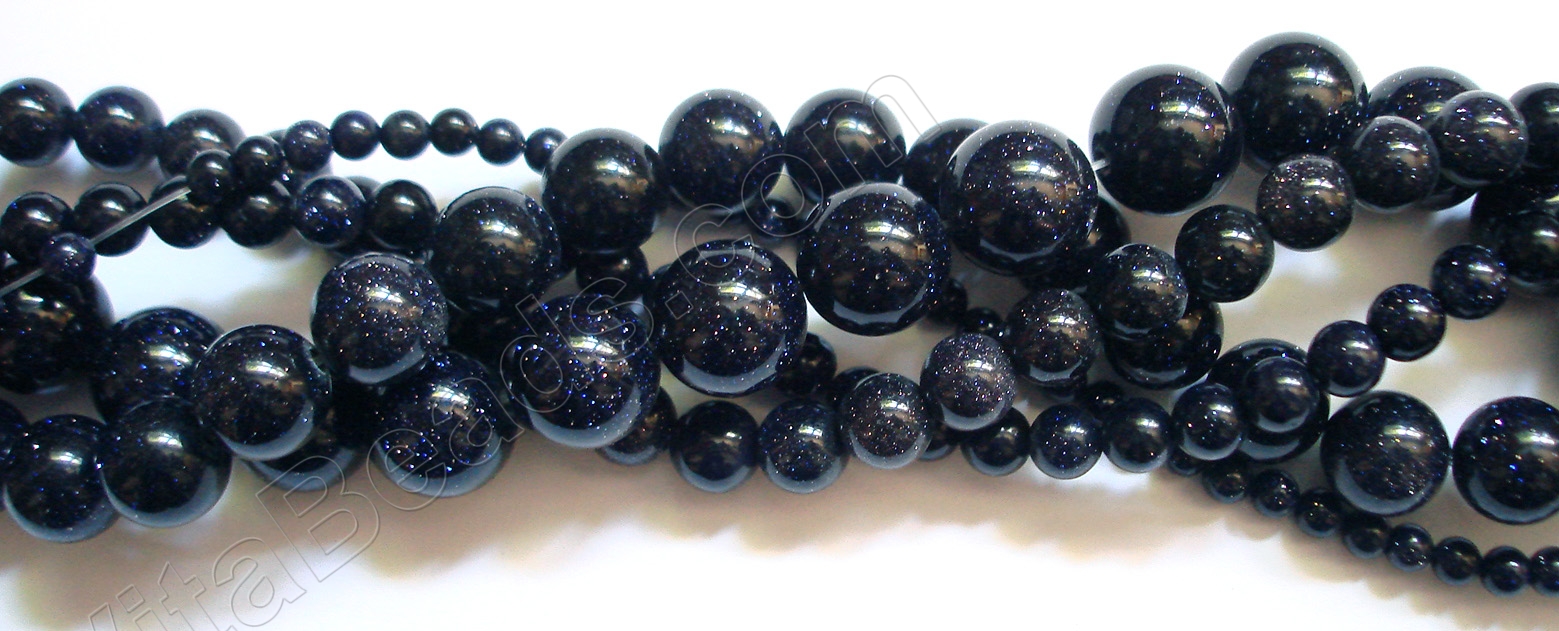
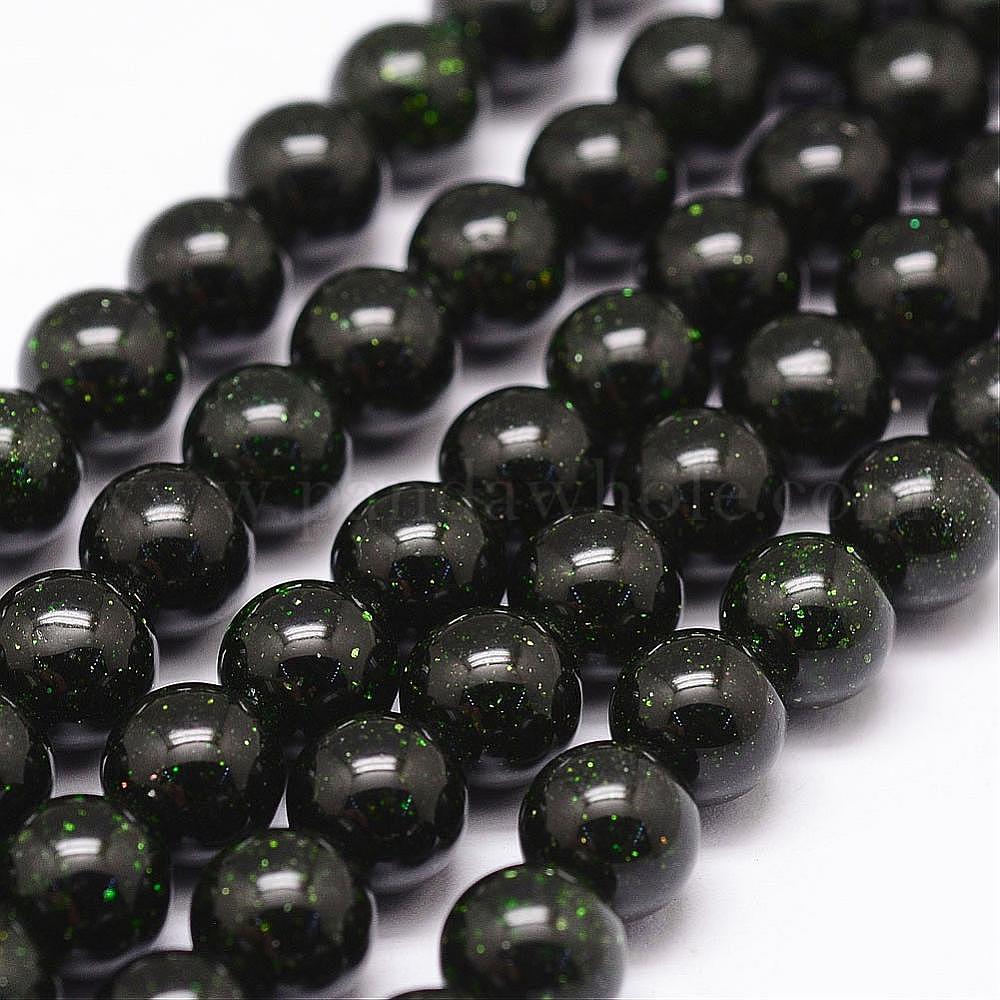
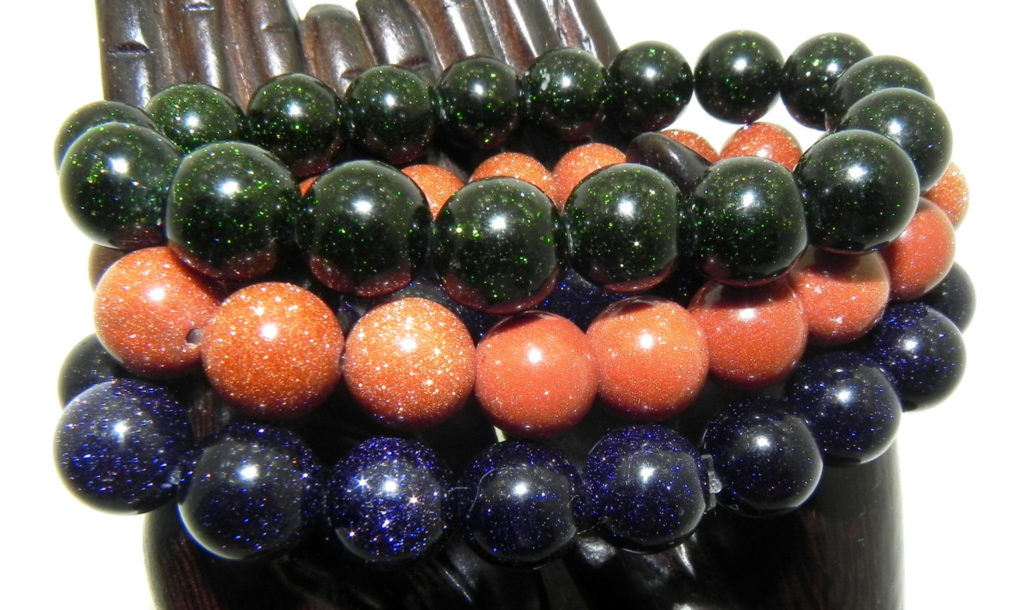
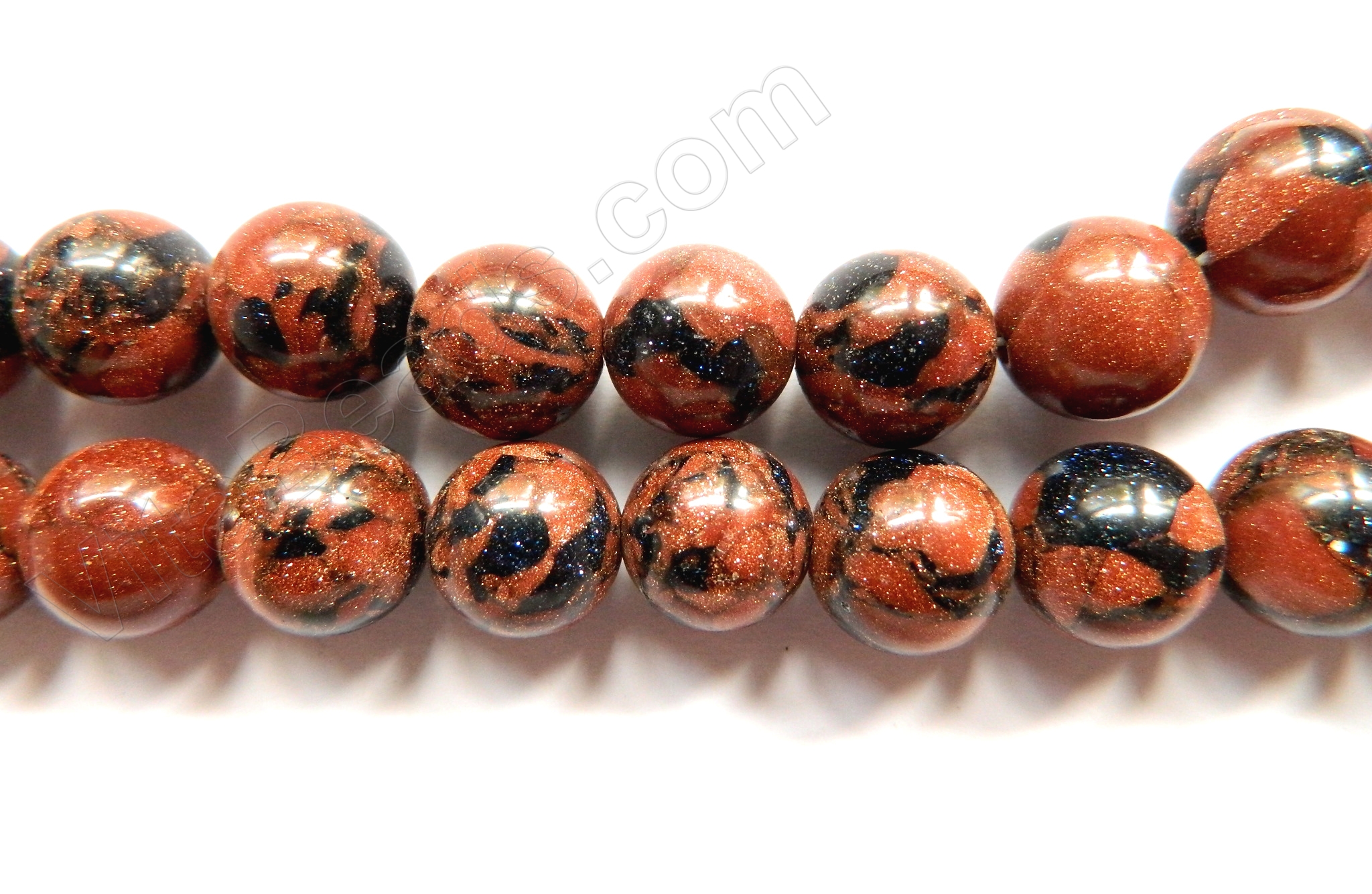
There are some "semiprecious stones" which are actually man-made. I don't mean imitation or synthetic stones, I mean that entire type of stone is never found in nature. My favourite of these is Blue Goldstone. Why is it called "Goldstone" if it is blue? Because the exemplar of this "stone" is, um... copper-coloured. I suppose they thought it was more impressive to call it "goldstone" rather than "copperstone". Standard Goldstone, as I said, is copper-coloured; but not just a coppery-brown, but coppery-brown with tiny glistening specks of bright copper. This "stone" is actually glass, invented by Venetian glassmakers in the 17th century, when they figured out how to make glass which included copper oxides in the mix, smelted in a low-oxygen environment so that pure copper would precipitate out of the molten glass, giving tiny crystals of pure copper, which is what makes it glitter. Blue Goldstone is created in the same kind of way, using cobalt oxide rather than copper oxide; the result is a deep deep blue with specks of silver. I think of it as "TARDIS-stone": deep blue with stars. There's also Green Goldstone and Purple Goldstone, though I've never seen the purple variety. (see Green, Brown, Blue goldstone beads) Sometimes brown and blue goldstone are combined together in one stone (see this example).
Edited to Add: links to examples of the stones.


![[identity profile]](https://www.dreamwidth.org/img/silk/identity/openid.png)






no subject
Date: 2017-10-29 05:16 am (UTC)no subject
Date: 2017-10-29 05:24 am (UTC)no subject
Date: 2017-10-29 05:31 pm (UTC)I find it hilarious that a synthetic gem still has 'healing' powers.
Blue Goldstone – CRYSTALPEDIA
Blue Goldstone vibrates at the frequencies of new beginnings and balance. Associated with the Throat Chakra, it encourages acceptance of who we are, to express authenticity and no longer deny our truth. Blue Goldstone is associated with the metaphysical properties of Copper
no subject
Date: 2017-10-30 05:06 am (UTC)Your wish is my command. I've now added in links to example images from all over the internet.
I find it hilarious that a synthetic gem still has 'healing' powers.
Yeah, it does seem ridiculous, what with the emphasis of it all being "natural magic" etc. Makes me wonder if they don't know that Goldstone is actually glass, since it's called Goldstone. Which makes me wonder who first declared what the metaphysical properties of Goldstone are. Then again, the existence of Goldstone pre-dates all the New Age stuff.
Blue Goldstone is associated with the metaphysical properties of Copper
Which is completely wrong -- if anything, brown goldstone would be associated with copper, since it is the one which actually contains copper.
no subject
Date: 2017-10-30 06:02 pm (UTC)Blue goldstone is gorgeous. I prefer jadite to nephrite I think, but both are lovely.
Seraphnite is amazing. I see exactly where the name comes from.
I see what you mean about howlite. Attractive in its own right.
Not certain about the synthetic turquioise - how do they get the cracks into it?
I like some synthetics, but I tend to dislike dyed stone. It never looks quite right.
no subject
Date: 2017-10-30 09:49 pm (UTC)YES!
I prefer jadite to nephrite I think, but both are lovely.
Both of them have colours that vary from pure white to dark green, so it's hard to tell.
Seraphnite is amazing. I see exactly where the name comes from.
(nods) So beautiful.
I see what you mean about howlite. Attractive in its own right.
I wanna go and make Howlite things and yell "what do you need to dye it for?"
Or dyed Magnesite, though I prefer the look of natural Howlite over the natural Magnesite. Mind you, I've seen some pieces of dyed Magnesite which looked fabulous, because the dye made a lovely contrast with the brown veins (like this)... but most of the time dyed Magnesite leaves me cold.
Not certain about the synthetic turquioise - how do they get the cracks into it?
Y'know, I have no idea.
I like some synthetics, but I tend to dislike dyed stone. It never looks quite right.
Exactly. Because it looks unnatural. Sometimes because the colours are too bright and strong. I'm of two minds about dyed mother-of-pearl, though, because sometimes the dyed versions can look just lovely anyway. But I still prefer the white/natural mother-of-pearl.
no subject
Date: 2017-10-31 09:24 am (UTC)The dyed magnesite you showed does work. I'd have guessed that as natural. They kept the colour more subtle.
no subject
Date: 2017-11-04 10:28 am (UTC)no subject
Date: 2017-11-04 10:43 am (UTC)Beadlooming a belt, oh my! That would take quite a while to do, but pretty awesome when done! I think one of my first craft tools was a bead loom, back when I was a teenager. Cool stuff.
no subject
Date: 2017-11-04 10:56 am (UTC)no subject
Date: 2017-11-04 11:18 am (UTC)no subject
Date: 2017-11-04 11:19 am (UTC)no subject
Date: 2017-10-27 09:04 pm (UTC)no subject
Date: 2017-10-28 01:34 am (UTC)no subject
Date: 2017-10-28 07:15 am (UTC)no subject
Date: 2017-10-28 05:28 am (UTC)no subject
Date: 2017-10-28 05:30 am (UTC)